

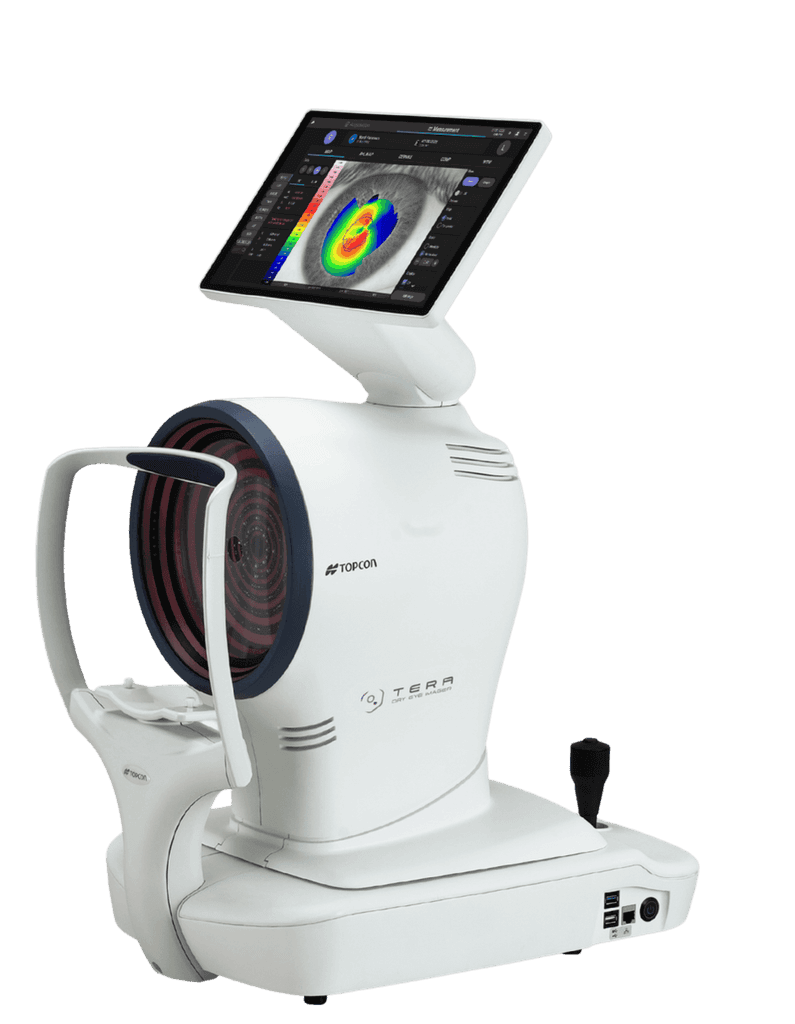
TERA Dry Eye Imager
Abstract
A comprehensive automated diagnostic system specifically designed for dry eye disease diagnosis and management.
Core Capabilities:
Automated Workflow:
- Designed to delegate testing and save time during examinations
- Automates multiple diagnostic procedures in one device
Clinical Focus:
- Built around TFOS DEWS III guidelines (latest dry eye standards)
- Provides data-driven insights for confident clinical decisions
- Aims to improve treatment acceptance and generate revenue opportunities
Key Diagnostic Features:
1. Tear Film Assessment:
- Non-Invasive Tear Break-Up Time (NIBUT) - automated tear film stability testing
- Tear Meniscus Height - quantifies tear volume to assess aqueous deficiency
- Lipid Layer Tear Film Assessment - uses patented diffused white light for clear lipid layer visualization
2. Meibomian Gland Evaluation:
- Infrared imaging to visualize gland structure
- Automated analysis of meibomian gland loss
- Uses validated Meiboscale for grading
3. Corneal Analysis:
- Corneal topography
- Anterior corneal wavefront (Zernike) analysis
- White-to-white measurement
- Supports custom contact lens fitting
4. Surface Imaging:
- High-resolution color imaging - evaluates blepharitis and conjunctival redness
- Fluorescein imaging - assesses ocular surface staining and contact lens fit
5. Pupillometry:
- Dynamic and static pupil measurements
- Measures size, centration, and light response
6. Patient Symptom Assessment:
- Integrated dry eye questionnaires (OSDI-6 and DEQ-5)
- Captures patient-reported symptoms with validated tools
Clinical Tools:
- Access to validated grading scales (Efron, JENVIS, Meiboscale, Guillon)
- 13" rotating monitor for flexible positioning
- Supports patient education and documentation
Clinical Benefits:
This is a comprehensive, all-in-one solution for dry eye practices, replacing multiple separate devices with one automated system that covers tear film, meibomian glands, corneal health, and patient symptoms
Visreed