

LipiFlow Thermal Pulsation System
Abstract
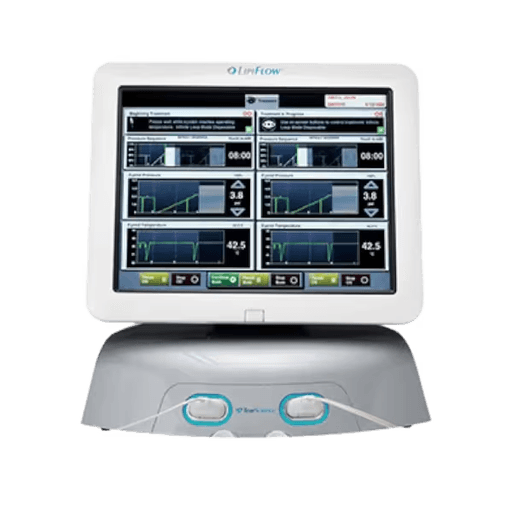
The TearScience LipiFlow Thermal Pulsation System is a medical device used by physicians in addressing Meibomian Gland Dysfunction (MGD). It consists of a console and a single-use sterile device known as the Activator, and has a drug-free mechanism of action
LipiFlow was the first FDA-cleared thermal pulsation system and remains one of the most extensively studied treatments for meibomian gland dysfunction.
Core Technology — Vectored Thermal Pulsation (VTP)
Vectored Thermal Pulsation (VTP) uniquely applies heat and peristaltic motion to the eyelid to remove gland obstructions and stagnant gland content. An intelligent pressure feedback loop sends pulsation sequences to expel blockages and stagnant material from the gland. The custom pressure sequence maximizes gland clearing while the device design protects the eye from unnecessary intraocular pressure.
The three pillars of VTP:
Vectored: The vaulted interior shield of the Activator protects the cornea while multi-point sensors monitor and regulate heat and pressure throughout the treatment. A maximum therapeutic temperature of 43°C is applied directly to the inner eyelid where the glands are located, while protecting the delicate structures of the globe.
Thermal: Proprietary heating technology ensures precise temperature regulation with continuous feedback and consistent heat application to the meibomian glands. The insulated and vaulted design of the Activator protects the cornea from unsafe temperatures.
Pulse: An intelligent pressure feedback loop sends pulsed sequences to expel blockages and stagnant material from the gland.
Thermal Parameters
| Parameter | Value |
|---|---|
| Treatment Temperature (inner eyelid) | 42.5°C (standard) / up to 43°C (max therapeutic) |
| Heat delivery site | Inner palpebral conjunctiva (directly over meibomian glands) |
| Corneal protection | Insulated, vaulted concave surface of the Activator |
The LipiFlow system delivers heat at a temperature of 42.5°C to the inner eyelid, and pressure to the outer eyelid surfaces simultaneously. These actions are designed to loosen, liquefy and express hardened meibomian lipids that have blocked the meibomian glands.
Console (Model LFTP-1000) Hardware
The console (model LFTP-1000) is a benchtop AC-powered device consisting of a touchscreen display with graphical user interface and patient database, activator connection points (for either eye), a power cord connection with a power switch, and 3 USB ports. As an optional extra, the touchscreen display can be mounted onto a pivoting arm, which allows the user to reposition the screen.
Activator (Disposable) — Anatomy & Design
The activator is a single-use eyepiece made of biocompatible polycarbonate and silicone, inserted around the person's eyelids. The lid warmer is a curved plastic cup approximately 24 mm in diameter that sits under the eyelids, on the eyeball. Its surface is silicone-lined to make it soft and flexible. An electric temperature-controlled heater is embedded in the convex surface and transfers heat through the inner eyelids to the meibomian glands. The concave surface is insulated to protect the cornea from heat. Two inflatable bladders on the eye cup continually pressurise and depressurise, squeezing the meibomian glands against the lid warmer.
Activator model generations:
- LFD-1000 / LFD-1100 — original models (cable permanently attached, disposed of after each use)
- LFD-2000 (Activator II) — the electrical and pneumatic connection point is moved closer to the patient interface, making the disposable portion smaller and less wasteful. The patient interface is used with a new semi-permanent cable which connects to the console but is not disposed of after treatment.
Treatment Protocol
| Parameter | Value |
|---|---|
| Treatment duration | 12 minutes |
| Eyes treated | Bilateral (both eyes simultaneously) |
| Anesthesia required | Topical anesthetic drop (pre-treatment) |
| Drug use during procedure | None (drug-free) |
| Pressure motion | Proximal-to-distal peristaltic pulsation |
LipiFlow is a 12-minute procedure that heats the meibomian glands to clear blockages by applying localized heat to both inner eyelid surfaces to 42.5°C while pulsating pressure is applied to the outer eyelids through an inflatable air bladder.
Clinical Efficacy
TearScience LipiFlow has been shown to increase gland secretion threefold, on average, with just one treatment. Safety and long-term effectiveness have been demonstrated in peer-reviewed studies.
Studies demonstrate significant improvements in meibomian gland secretion scores, tear breakup time, and patient-reported symptom scores following a single 12-minute treatment. A systematic review confirmed that LipiFlow improves meibomian gland function and ocular surface health, with benefits sustained for up to 12 months in many patients.
Indications & Contraindications
Indicated for: Adult patients with chronic cystic conditions of the eyelids, including Meibomian Gland Dysfunction (MGD), also known as Evaporative Dry Eye or Lipid Deficiency Dry Eye.
Use with caution in: Moderate to severe (Grade 2–4) allergic, vernal, or giant papillary conjunctivitis; severe (Grade 3 or 4) eyelid inflammation such as blepharochalasis, staphylococcal blepharitis, or seborrheic blepharitis — as these conditions may cause ocular symptoms unrelated to cystic meibomian glands.
Research & IP
The TearScience LipiFlow System represents more than 14 years of dedicated research and is protected by more than 30 patents.
Scientific Context
MGD is the leading cause of evaporative dry eye. The meibomian glands secrete meibum — a complex lipid mixture — that forms the outermost layer of the tear film and prevents aqueous tear evaporation. When gland orifices become obstructed by inspissated (thickened) lipids, the tear film destabilizes. LipiFlow's approach of applying heat from the inside of the lid (directly at the gland level) while simultaneously applying peristaltic pressure from the outside represents a mechanistically superior approach compared to external warm compresses, which lose significant thermal energy through the eyelid tissue before reaching the glands.
Visreed