

CureSight - NovaSight
Abstract
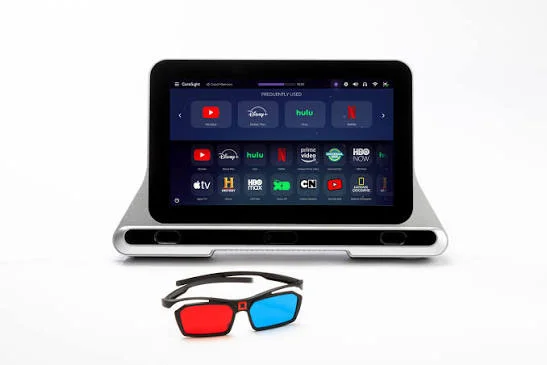
CureSight is an eye-tracking-based binocular home treatment for amblyopia in children. The child watches streamed content on a dedicated console while wearing red-blue glasses. The device tracks gaze 90 times per second and blurs the central image shown to the fellow eye, so the amblyopic eye has to contribute to the picture. It was cleared by the FDA in 2022 after a pivotal trial showed it was non-inferior to patching.
Core Technology Specifications
Treatment Platform: Dichoptic (binocular) digital therapy with real-time eye tracking
System Type: Home-use console with anaglyph glasses and a cloud portal (CureSight CS100)
Eye Tracking: Infrared optical sensors, gaze position sampled 90 times per second
Glasses: Red-blue anaglyph, shipped to the home and collected after treatment
Content: Any streamed content of the child's choice (the console shows video apps)
Target Patients: Children aged 4 to under 9 years with amblyopia
Regulatory Status: FDA 510(k) cleared (K221375); CE marked under EU MDR 2017/745
Physiological Principle: Amblyopia as a Binocular Condition
Amblyopia is reduced visual acuity from abnormal visual development, due to refractive error, strabismus or deprivation. Beyond the eye itself, the visual cortex suppresses input from the weaker eye. Patching treats the problem by forcing use of the amblyopic eye, one eye at a time, and does not train the two eyes to work together. Binocular treatments aim to reduce this suppression and to improve stereoacuity as well as visual acuity.
How the System Works
- Dichoptic presentation: The console separates the image into two digital channels, one for each eye. The red-blue glasses deliver each channel to the matching eye
- Gaze tracking: The eye tracker follows the gaze of each eye and places the image in the right position for each eye, including when the eyes are slightly deviated
- Central blur: The central area of the image shown to the fellow eye is blurred in real time. The brain has to use the detail from the amblyopic eye to complete the picture
- Adherence monitoring: The eye tracker records when the child is actually watching and wearing the glasses, so treatment time and adherence are measured by the device
Clinical Evidence
- Design: A multicenter, randomized, masked pivotal trial compared CureSight with occlusion patching (NCT04785690)
- Primary outcome: The primary outcome was the improvement in visual acuity of the amblyopic eye from baseline to week 16
- Result: The treatment was found non-inferior to patching. The mean improvement in distance visual acuity in the per-protocol CureSight group was 2.8 lines
- Adherence and preference: Adherence measured by the eye tracker averaged 93% among subjects evaluated at week 16, and 93% of parents said they were likely or very likely to choose CureSight over patching
- Safety: Events reported in the FDA summary for the CureSight or patching groups included diplopia, eye strain, skin irritation and seizures
Indications and Patient Selection
- Children aged 4 to under 9 years with amblyopia
- Anisometropic amblyopia without strabismus
- Amblyopia with mild strabismus of up to 5 prism diopters
- Improvement in visual acuity and in stereoacuity is the labeled purpose
Cloud Platform and Workflow
- Logistics: The console and glasses are sent to the patient's home, and the glasses are collected at the end of treatment
- Monitoring: A web portal gives the referring eye care provider and the CureSight monitoring center access to treatment progress and compliance data
- Data: Data from every session is aggregated in the cloud platform, so the provider can review usage between visits
- Coding: In the US, three Category III CPT codes cover remote amblyopia treatment with an eye-tracking device: 0704T (device supply, set-up and patient education), 0705T (monitoring-center technical support) and 0706T (physician interpretation and reporting)
Clinical Applications
- First-line or alternative treatment for pediatric amblyopia where patching has failed or is poorly accepted
- Home treatment with remote follow-up of adherence
- Treatment aimed at binocular function and stereoacuity
- Orthoptic and optometric follow-up using portal data
Who Can Use It
Pediatric ophthalmologists, orthoptists and optometrists prescribe and follow the treatment through the referral program and the portal. Parents supervise the child's use at home.
Comparison with Occlusion Patching
| Feature | Patching | CureSight |
|---|---|---|
| Principle | Monocular occlusion | Binocular, dichoptic |
| Both eyes used | No | Yes |
| Adherence data | Usually parent-reported | Measured by eye tracker |
| Content | Normal activities | Any streamed content |
| Follow-up | Clinic visits | Visits plus cloud portal |
Strengths and Limits
Strengths: Binocular approach, objective adherence data, child-friendly content, no patch and remote monitoring.
Limits: It is cleared for a limited age range (4 to under 9 years) and for mild strabismus only. Results depend on the child wearing the glasses and watching the screen. Costs and reimbursement vary by region.
About NovaSight
NovaSight is a pediatric eye care company founded in 2016. It focuses on eye-tracking-based solutions. Its second product, TrackSight, is a software solution for myopia prevention and vision monitoring, which was not approved for sale in any country at the time of the source.
Limitations of Available Specifications
Note: The screen size and resolution, device dimensions and weight, connectivity, tracker latency and accuracy, and the prescribed daily treatment duration of the pivotal trial were not available in the documentation reviewed. Contact NovaSight for the full technical datasheet and treatment guidelines. This content supports clinical judgement and does not replace it.
Visreed